

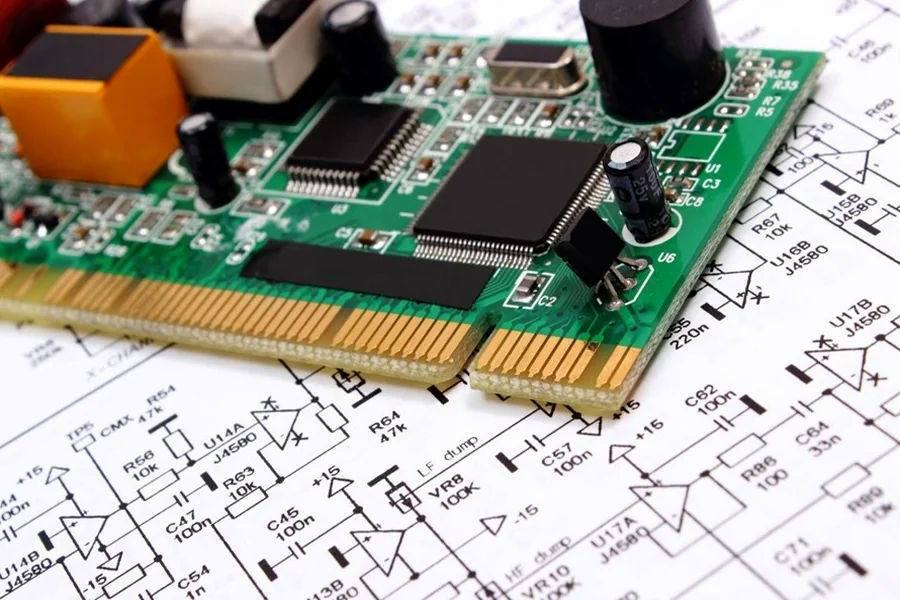
Printed circuit boards (PCBs) form the foundation of virtually every electronic device we use today. Among the various types, Single-Sided PCBs stand out for their simplicity, cost-effectiveness, and ease of manufacturing. These boards are widely used in low-density designs and consumer electronics where advanced routing or multiple layers aren’t necessary.
As technology continues to advance, single-sided PCBs remain a staple in many industries, offering an ideal balance between functionality and affordability. Understanding their structure, applications, and benefits provides insight into why they continue to play a critical role in modern electronics manufacturing.
What Is a Single-Sided PCB?
A Single-Sided PCB, also known as a single-layer PCB, is the most basic type of circuit board. It features one conductive copper layer on one side of the board, while the opposite side is used for mounting components. The electrical paths are etched on the copper layer, and components are inserted or soldered on the same side.
Because everything is placed and connected on one side, single-sided PCBs offer a straightforward layout that is easy to design, test, and manufacture. This makes them highly desirable for simpler electronic products and prototypes.
Manufacturing Process of Single-Sided PCBs
The manufacturing of single-sided PCBs involves fewer steps than their double-sided or multilayer counterparts. The process begins with a base substrate, commonly made from FR-4 (fiberglass), phenolic, or other dielectric materials. A thin copper layer is laminated onto one side of this base, which will become the conductive layer.
Design patterns are transferred to the copper layer using photoresist and UV light. After development, etching removes the unwanted copper, leaving behind the circuit traces. The remaining layer is then covered with solder mask and silkscreen to protect and label the circuit paths before components are assembled.
This streamlined process not only reduces time but also limits material usage, leading to significant cost savings for manufacturers and customers alike.
Applications of Single-Sided PCBs
Despite their simplicity, single-sided PCBs are widely used in a range of industries. Their design is best suited for circuits that do not require crossovers or complex routing, making them ideal for lower-density applications.
In consumer electronics, single-sided PCBs are found in products like calculators, remote controls, toys, LED lighting systems, and kitchen appliances. Their use in such applications is largely due to their affordability and adequate performance for simple circuits.
In the automotive sector, they’re used for basic control units and dashboard electronics. Meanwhile, in industrial applications, single-sided boards support functions like relay monitoring and low-power sensor interfaces.
Because of their reliability and cost-effectiveness, single-sided PCBs are also used in power supplies and charging devices where complex circuitry isn’t essential.
Advantages of Single-Sided PCBs
One of the most notable advantages of single-sided PCBs is their low manufacturing cost. With only one conductive layer and a simplified assembly process, these boards are cheaper to produce than double-sided or multilayer PCBs. This makes them perfect for mass production of simple electronic devices.
The design and fabrication are also easier and faster, which reduces lead times significantly. This is particularly beneficial in the prototyping phase, where speed and flexibility are essential.
Furthermore, the reduced complexity of these boards results in fewer potential points of failure. Their straightforward design improves durability and simplifies maintenance, making them more reliable for applications where performance expectations are modest.
For electronics manufacturers and designers seeking to minimize costs without sacrificing quality, single-sided PCBs are an efficient solution that meets basic circuit requirements effectively.
Design Considerations for Single-Sided PCBs
While single-sided PCBs offer many advantages, they also come with design limitations. The lack of routing flexibility due to a single conductive layer can restrict circuit complexity. Designers need to carefully plan trace placement and component layout to avoid congestion and ensure efficient signal flow.
Additionally, thermal management must be addressed properly. Since all components are placed on one side, heat dissipation can become a concern, especially in power-sensitive devices. Selecting appropriate base materials and considering thermal vias or heat sinks may help alleviate thermal buildup.
Signal interference and crosstalk are also factors to consider, though less prevalent than in multilayer designs. Designers must optimize trace widths and spacing to ensure stable performance.
Despite these limitations, with proper design expertise and manufacturer support, single-sided PCBs can deliver reliable and economical performance in a wide range of applications.
Conclusion
Single-Sided PCBs continue to be a crucial component in the global electronics industry. Their simplicity, affordability, and effectiveness make them a preferred choice for many low-to-medium complexity devices. From everyday consumer products to automotive electronics and industrial control systems, single-sided PCBs provide a durable and efficient platform for electronic circuitry.
Choosing a reliable manufacturer is essential to ensure that even the simplest PCB meets high standards of quality and performance. If you’re looking for a trusted China PCB manufacturer with experience in producing high-quality single-sided boards, Viasion Technology offers tailored solutions, quick turnaround times, and exceptional support for all your PCB needs.
